Building a Daily Writing Habit: 7 Essential Steps to Success
Establishing a consistent writing habit can be a challenging task, but with the right approach, you can overcome the obstacles and make writing a part of your daily routine. In this article, you will learn how to develop a daily writing habit, from setting goals and creating a schedule to tracking progress and overcoming writer's block. By following these steps, you will be able to cultivate a writing habit that will help you achieve your writing goals, whether you're a beginner or an experienced writer. So, let's get started and explore the 7 essential steps to building a daily writing habit.
Step 1: Set Your Writing Goals and Objectives - Creating a Writing Habit
To develop a writing habit, you need to start by setting clear goals and objectives. What do you want to achieve through your writing? Do you want to write a novel, maintain a blog, or simply improve your writing skills? Having a clear idea of what you want to achieve will help you stay focused and motivated. For example, if you want to write a novel, your goal might be to write 1,000 words per day. Make sure your goals are specific, measurable, and achievable. You can also create a vision board or write down your goals and post them somewhere visible to remind yourself of what you want to achieve. 
Step 2: Create a Writing Schedule - Developing a Writing Habit
Once you have set your writing goals, it's time to create a writing schedule. This will help you stay on track and ensure that you make time for writing every day. Decide on a specific time of the day that works best for you, and stick to it. It could be early in the morning, during your lunch break, or in the evening. Make sure you choose a time when you're most alert and focused. You can also use a planner or calendar to schedule your writing sessions and set reminders to help you stay on track. For example, you can set a reminder on your phone to write for 30 minutes every day at 7 am. 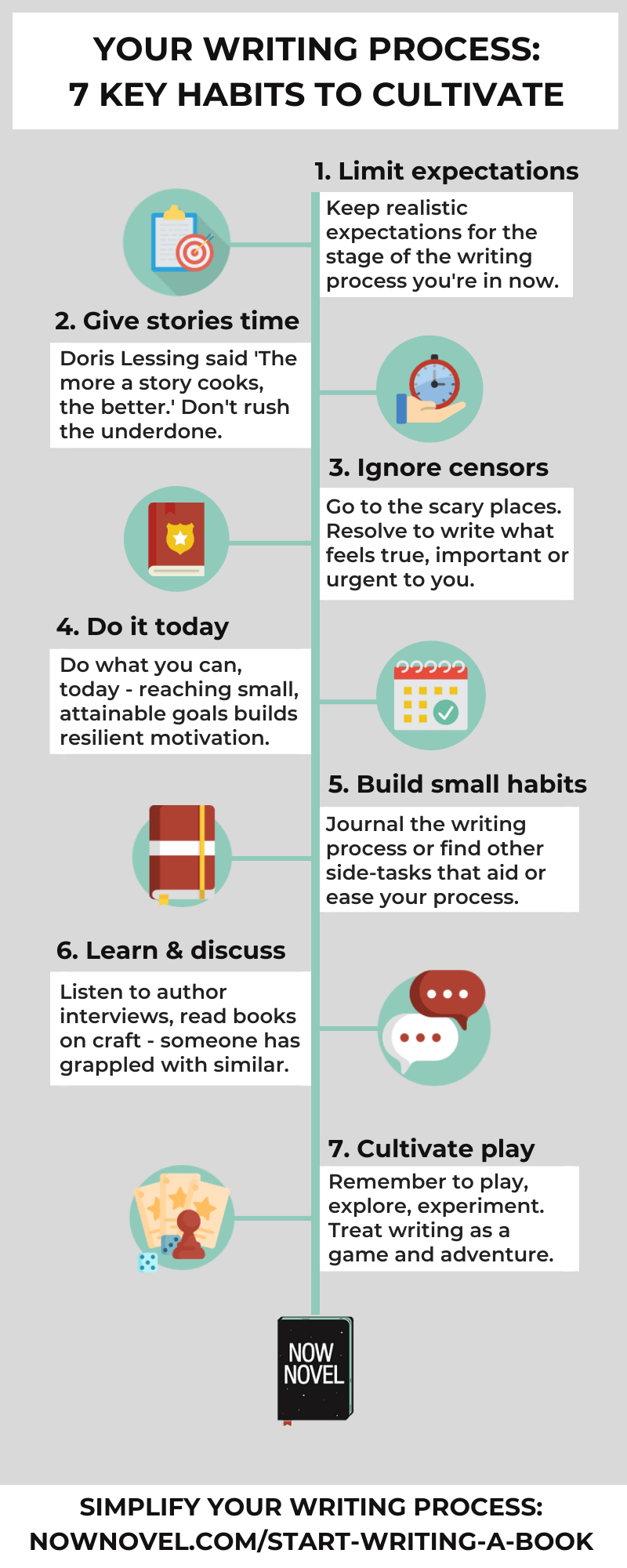
Step 3: Choose a Writing Location - Building a Writing Habit
The location where you write can have a significant impact on your productivity and focus. You need to choose a location that is quiet, comfortable, and free from distractions. It could be a dedicated home office, a coffee shop, or a library. Make sure you have all the necessary tools and resources you need to write, such as a computer, paper, and pens. You can also consider investing in a comfortable chair, a desk, and a good pair of headphones to help you stay focused. For example, you can set up a home office in a spare room or use a co-working space to write.

Step 4: Develop a Pre-Writing Routine - Writing Habit Tips
Having a pre-writing routine can help you get into the right mindset and prepare you for your writing sessions. This could include activities such as meditation, reading, or exercise. You can also use this time to review your notes, outline your ideas, and plan your writing. For example, you can start by meditating for 10 minutes, then review your notes and outline your ideas for the day. This will help you stay focused and ensure that you make the most of your writing time. You can also use this time to make a cup of coffee or tea, and get settled into your writing space.

Step 5: Start Writing - Overcoming Writer's Block and Building a Writing Habit
Now it's time to start writing. Don't worry too much about grammar, spelling, or syntax. Just focus on getting your ideas down on paper. You can always edit and refine your work later. If you're struggling with writer's block, try freewriting or writing prompts to get started. You can also use writing exercises to help you loosen up and get into a creative flow. For example, you can write a stream-of-consciousness piece, or describe a personal experience. The goal is to keep writing and make progress, rather than to produce perfect work.

Step 6: Track Your Progress - Writing Habit Tracker
Tracking your progress is essential to building a writing habit. You need to monitor your progress, set milestones, and reward yourself for your achievements. You can use a writing log or journal to track your daily word count, or use a spreadsheet to monitor your progress. You can also use writing apps or software to help you stay organized and focused. For example, you can use a habit tracker app to track your writing habit, or a writing app to set writing goals and deadlines.

Step 7: Make Adjustments and Stay Consistent - Maintaining a Writing Habit
Finally, it's essential to make adjustments and stay consistent. Don't be too hard on yourself if you miss a day or two. Instead, focus on getting back on track and making progress. You can also use this time to reflect on your writing habit and make adjustments as needed. For example, you can change your writing schedule, or try a new writing location. The key is to stay consistent and make writing a part of your daily routine. With time and practice, you will develop a writing habit that will help you achieve your writing goals and improve your overall writing skills.

Frequently Asked Questions
Q: How long does it take to build a writing habit? A: It can take anywhere from 2-6 weeks to build a writing habit, depending on your schedule and consistency.
Q: What if I miss a day or two? A: Don't worry if you miss a day or two. Instead, focus on getting back on track and making progress.
Q: How can I stay motivated and focused? A: Use a writing schedule, track your progress, and reward yourself for your achievements. You can also use writing prompts and exercises to help you stay creative and focused.
Turn Writing Into A Daily Habit: A Guide For Newbies How To Keep

Turn Writing into a Daily Habit: A Guide for Newbies How to keep ...
How To Develop A Writing Habit: 15 Tips For Consistent Writing

How to Develop a Writing Habit: 15 Tips for Consistent Writing ...
How To Build A Writing Habit – Artofit

How to build a writing habit – Artofit